
It has been pretty clear to most scientists that physical traits are inherited from previous generations such as eye color, hair color, height, etc. However, when it comes to behavior, it gets a little more complicated. Researchers believe that “it’s a complex interaction between genetics and the environment.”
Author: meggganzhang
The Dangerous Mix: Drinking and Driving
The act of drinking and driving is a slippery slope that many young people, especially teenagers, fall on. Most people under the influence believe that they are still fully conscious and able to perform everyday activities such as driving: however, impaired driving is one of the leading causes of many injuries and deaths each year.
“Every day, 29 people in the United States die in motor vehicle crashes that involve an alcohol-impaired driver. This is one death every 50 minutes. The annual cost of alcohol-related crashes totals more than $44 billion.” CDC said.

The issue of drinking and driving has become an increasingly popular problem. It has become so serious now that getting into a vehicle after consuming any type of alcohol is considered a serious crime. This crime is called DUI (driving under the influence) which involves anyone driving with a blood alcohol content of at least 0.08 percent. Even people who have consumed only a small amount of alcohol are at high risk when they get behind the wheel. They might not even feel any symptoms or signs of being under the influence, but that does not mean that it is any less dangerous.
Young adolescents and teens are at very high risk when it comes to impaired driving. They will consume a decent amount of alcohol and not feel it in them yet and make the irresponsible decision of getting behind the wheel. It normally takes anywhere from 30 minutes to 2 hours for alcohol to be absorbed into your main bloodstream: however, during this your breathing can be slowed down and cognitive skills are no longer as sharp and clear. Because your cognitive skills are not sharp and much of the time delayed, it is always unsafe and dangerous to get in the car after drinking.
Dangers of Drinking and Driving
It is very important that people understand the dangers of drinking and driving. Any amount of alcohol in your bloodstream will affect your ability to drive. Driving requires concentration and awareness of surroundings. Alcohol hinders these abilities and causes less stability when driving. There are several ways in which alcohol impairs your driving ability.
- Reduction of Concentration: When driving, you need be focused on the road, whether it is your speed, staying your lane, or turn signals. This requires attention and focus. No matter the amount of alcohol, it can influence your concentration and decrease your attention span which increases the chance of a car accident.
- Hinder Judgement: Your brain controls how you judge things and when driving a vehicle, judgement plays a huge role. You need your judgement to foresee any potential obstacles in the road and make clear decisions. When your judgement is no longer clear, your awareness and alertness on the road dramatically decreases and becomes blurry.
- Slow Reaction Time: When there is alcohol in your system, it slows down your thinking and how fast you respond to different situations. For example, if a car suddenly brakes in front of you or if a pedestrian were to be crossing the street, it takes your brain longer to process things which leads to slower reaction rate and higher chance of accidents.
These are only some of many dangers that alcohol has on people’s driving abilities. It is important that people are aware of how dangerous and harmful getting behind the wheel when intoxicated is. This way, annual deaths from drunk driving can start to decrease. So the next time you decide to consume alcohol, make sure that your keys are stored in somewhere safe so that you don’t commit a serious crime and cause any harm to yourself or others around you.
Parental Hesitancy for Routine Vaccines
Even though vaccines are known as one of the greatest accomplishments in public health history, they are being looked down upon for numerous reasons. Parental vaccine hesitancy has become more widespread and known. The social structure of our society causes herd mentality in many parents and people causing more sicknesses in children that could be easily preventable from vaccine. However, pediatricians have an obligation to respond to this behavior through education and no coercive behaviors. This has been an increasingly popular topic as it has become more prevalent in modern society.
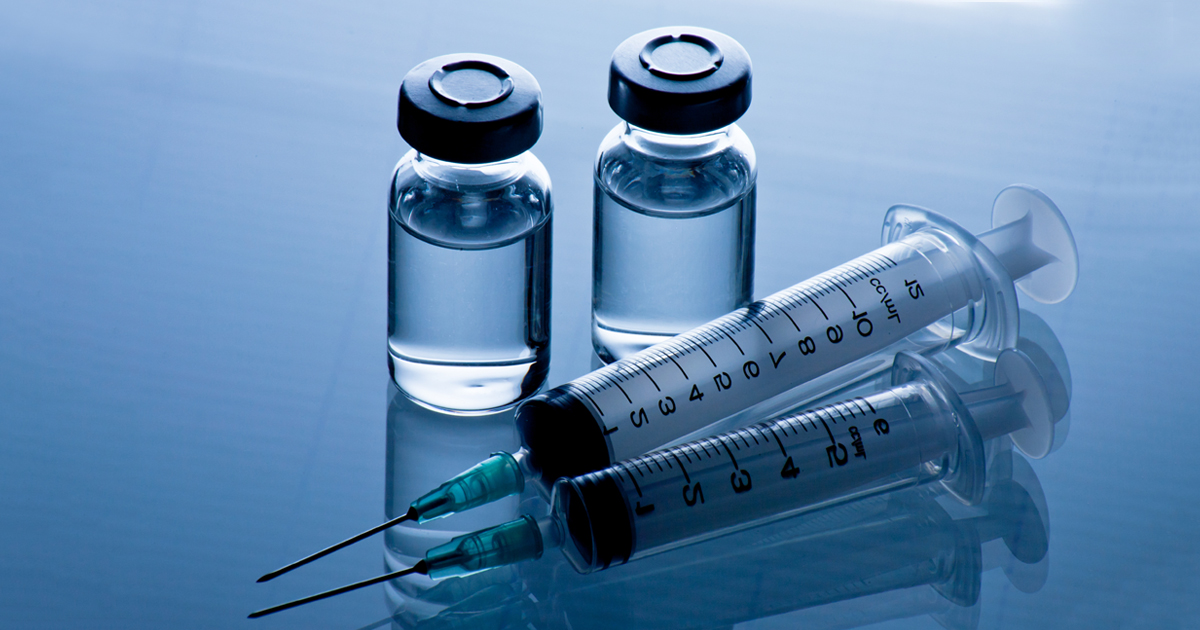
Vaccines that are most typically overlooked by parents are influenza, HPV, polio, MMR, varicella, hep B and much more. There are a number of reasons that parents refuse these vaccines, including:
- Lack of need for vaccines: Since immunization has started, there has been decrease in the amount of VPD(vaccine prevented diseases) and parents are starting to look at the risk of the vaccien rather than the disease itself. Recent studies have shown that parents believed it was better for their children to get the disease naturally rather than immunized. They also believed that it was better to take inaction than action(vaccine). Because of parents’ lack of knowledge, they believe that their children are not susceptible to VPDs.
- Safety of vaccines: Safety has always been one of the main concerns of vaccines. Because unlike other types of medicine, vaccines are given to healthy to prevent sicknesses. This means that pediatricians need to provide information informind parents that vaccines are not 100 percent safe but the only side effects are very mild and low grade. Parents will often want to learn more specifically about a vaccine so healthcare providers must be knowledgeable about the vaccine and provide the guidelines that FDA has set for these vaccines. Pediatricians must provide information on the hypothetical adverse events that could potentially occur and inform the parents that they will continue to monitor the vaccine’s safety. However, when explaining this, healthcare providers must explain it in a way that parents will understand and not with an overwhelming amount of medical terminology. Parents will then have to decide that the risks are safe to take or not.
- Lack of trust in healthcare providers: Trust is very important when it comes to the parents relation with their healthcare provider. Parents usually report that they have a high level of trust in healthcare providers when it comes to advice about nutrition and behavioral development. However, this level of trust is not the same when talking about the safety and details of vaccines. Parents believe that healthcare providers tend to only provide the benefits of vaccines and not the risks, causing to be think that the information is one-sided. Furthermore, parents question the information about vaccine safety provided from the federal government. Because the government has the ability to record any adverse events or risks relating to vaccine safety, they are skeptical to whether everything the government has reported is honest.
- Perceived lack of involvement in decision-making process: Many parents have concerns about vaccination schedule as most vaccines are given to the child at a very young age before their immune system has fully developed. Following a strict schedule given by healthcare providers tends to make some parents feel like they don’t get to make decisions for what they think is best for their child. They likely try to suggest an alternative schedule to make them feel like their child’s vaccines are more individualized rather than standard schedules which helps alleviate fears that parents may hold. However, there are studies showing that alternative schedules are more risky as they may lead to more harm than good. It increases the risk of children contracting infections and the delaying of vaccines keeps the child susceptible to infections for longer. These parents are not very insistent on this though, some will still consider the vaccines at regular wellness checkups but this requires healthcare providers to provide more details relating to risks and benefits.
- Vaccines and autism: There are concerns that autism can result from vaccines. This arose from vaccines that carried thimerosal which was believed to affect brain development in children. Thimerosal was used to prevent dangerous bacteria, but it was only used in very small doses. Because these vaccines were given during the time period of when children first have brain development, parents believed that they were not safe. In 1998, this concern increased as a study was published explaining how there was a direct link between autism and the MMR vaccine. However, later scientists found out that this information was falsified and didn’t have proper medical protocols listed. This still concerned especially parents that already had one autistic child. They were more likely to stray away from vaccines for their other children as well. A more recent study confirmed that there is no medical evidence of MMR vaccine leading to autistism.
These are only some of many reasons why parents refuse to get their children vaccinated. Pediatrics must consider the reasons that parents do this and provide accurate amounts of information about vaccines to parents. In doing this, they can build trust with parents which may help parents to be less likely to refuse vaccines in followup appointments.
How the Brain Senses Smells
Scientists have discovered how humans perceive different odors and distinguish them from different odors. It is pretty fascinating.
At NYU Grossman School of Medicine, scientists have been conducting experiments on mice regarding their ability to sense odors through their brain. Researchers have created an electrical signature that resembles an odor that can trigger the olfactory bulb in the brain’s smell processing center even though the odor is nonexistent.
The odor simulating signal is humanmade giving researchers flexibility and the ability to identify signals in brain activity more accurately. Researchers are able to manipulate the time of nerve signalling and identify from there which changes were the most prominent for the mice to detect the “synthetic odor”.
“Decoding how the brain tells apart odors is complicated, in part, because unlike with other senses such as vision, we do not yet know the most important aspects of individual smells,” says study lead investigator Edmund Chong, MS, a doctoral student at NYU Langone Health. “In facial recognition, for example, the brain can recognize people based on visual cues, such as the eyes, even without seeing someone’s nose and ears,” says Chong. “But these distinguishing features, as recorded by the brain, have yet to be found for each smell.”
This study focuses and centers on the olfactory bulb which is behind the nose in humans and animals. There have been past studies relating to sensing odors have shown that molecules trigger receptor cells in the nose and then travel to nerve bundles in the bulb which then send neurons to the brain cells. However, the timing to bulb activation is very specific and tricky as it is unique to every smell. Each smell triggers a different signal which then goes to the brain’s cortex and signals a response. Similarly, because scents can change over time and mingle with other scents, scientists have had trouble identifying one specific smell amoung neurons in the brain.
Researchers have now designed a newer study based on genetically engineered mice by another lab that allows brain cells to be activated by shining a light on them, which is a technique called optogenetics. They then trained mice to recognize different signals that were generated by light activation. The researchers would reward the mice with water if they had perceived the right odor and pushed a lever. If the mice pushed the liver after the activation, they would not receive any water. This model allowed researchers to change the timing and mix of the light activation which allowed them to see the mouse’s change in behavior.
The results that researchers found were that changing the odor-set during the first activation led to a 30 percent drop in the mouse’s ability to correctly sense an odor and obtain water. On the other hand, changes in the last activation led to a 5 percent decrease in the acurrate odor sensing.
The timing of the activation worked together amazingly, researchers noted. Their tight control in the model and which receptors in the mouse’s brain were activated enabled the team to sift through the variables and identify whcih odor features stood out. “Now that we have a model for breaking down the timing and order of glomeruli activation, we can examine the minimum number and kind of receptors needed by the olfactory bulb to identify a particular smell,” says study senior investigator and neurobiologist Dmitry Rinberg, PhD.
“Our results identify for the first time a code for how the brain converts sensory information into perception of something, in this case an odor,” adds Rinberg. “This puts us closer to answering the longstanding question in our field of how the brain extracts sensory information to evoke behavior.”
Scary Problem: Teen Pregnancies
The United States teen pregnancy rates are higher than any other industrialized and westernized nations in the world. Although the rates have recently started to decrease, teen pregnancy and childrearing substantially effect teens and teen parents with immediate and long term impacts.
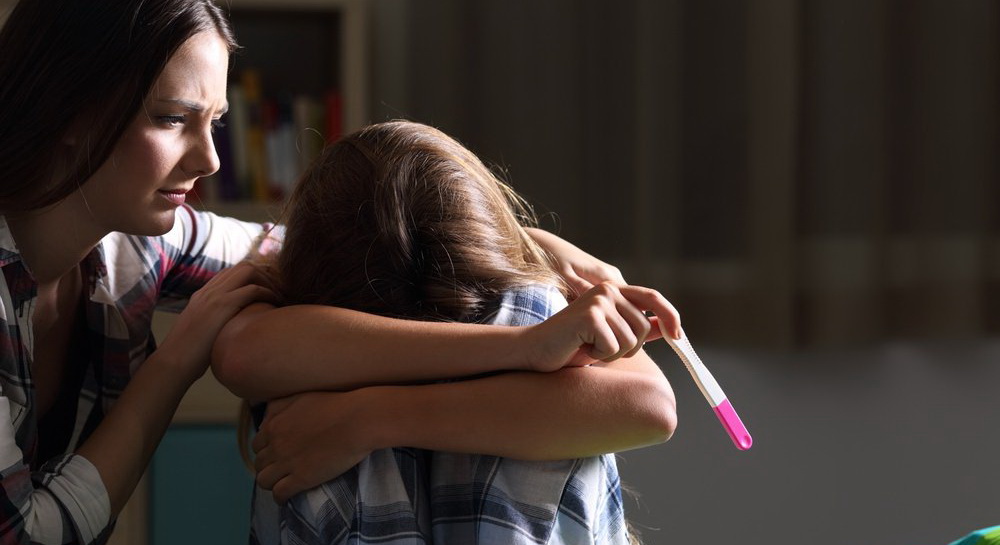
Some impacts of teen pregnancies and childbearing is that it increases high school dropout percentage for girls. Only about half of teen mothers receive a high school graduation diploma whereas 90 percent of teen girls who didn’t give birth during their adolescence received a high school diploma. Additionally the children of the teens have risk as well. They could very likely have health problems that could be physical and emotional as teens are not usually ready to take on childbearing in their adolescence. The children are also most likely to be incarcerated at some point in their teenage years as they do not have a great example set for them. In addition to these risks, the child is likely to follow in the footsteps of the teen parent which means that he/she could have lower academic achievement, drop out of high school, face unemployment, or even give birth themselves as a teenager. However, as of the past few years teen birth rates have been steadily decreasing, lowering the risk of teens and their children.
The reason for decreasing teen birth rates is unclear but a good sign to the world and the people in it. However, there are some known reasons that have been responsible as a contribution to higher teen birth rates. Teens in lower socioeconomic conditions such as low education level and low income in the teen’s family have been considered to contribute to high teen birth rates. Furthermore, teens in welfare systems have an increased risk of teen pregnancy. For example, teens in the foster care system are twice as likely to get pregnant than those not in foster care. This has to deal with the teens’ emotional states to be less strong as they do not have parents in their lives to guide them as strong role models. Teens in less fortunate situations have so much to handle to make their lives better due to their health disparities. In order to help prevent more teen pregnancies, CDC and other organizations are providing resources to areas with the greatest need.
Many teen pregnancy prevention programs have been designed by various health organizations in order to keep the rates as low as possible. These programs include sexuality education programs, youth development programs, abstinence education programs, clinic-based programs, and programs specifically designed for diverse populations and settings. In addition to these programs, teens need friendly contraceptive and reproductive health services, such as Planned Parenthood, and support and an understanding attitude from parents and trusted adults to help them make the right and best decisions when coming to a teen’s relationships, sex, and birth control. These needs are essential to teens especially when they need the help and can help make their lives and healthier and better for them.
Pediatricians Struggling for Survival Amidst COVID-19
On a normal day at any pediatric practice, the waiting room would be hustling with kids running around and playing games in the waiting room, infants crying and yelling, and teens rapidly typing away on their phones. In the past few weeks, waiting rooms have been deserted. Every object in the room has been confiscated due to the risk of spreading the virus. Empty chairs everywhere and not a single young patient is seen.

Many private practices are struggling to stay alive during the time of the pandemic. Patient volume has drastically decreased. All checkups and regular doctor visits have been cancelled. Following the guidelines from the American Academy of Pediatrics, all wellness appointments for young children such as infants and toddlers. During this time, this is a very standard protocol and guideline to follow by, however, parents are starting to fear bringing their children back to clinics. This creates a potential problem in the future.
Pediatric patients are still taking in patients but it has been cut down by almost 40 percent. The clinics are now set up for emergency sick patients. Pediatricians are more than willing to open and help out patients who need it, however, they must face a new reality. Revenues are crashing, shortage of personal protective equipment, and terrified parents and children. The welcoming pediatric office filled with warmth has now turned into an unsafe and terrifying place for parents and children. Amidst all of this, pediatricians must treat young patients that could have COVID-19 without displaying symptoms.
They have many serious issues coming with this new reality: not enough protective gear and the safety of patients. The US has never experienced a pandemic like this before. No one was prepared with the proper equipment and training to deal with this kind of situation. Pediatricians have had to make scary decisions about how to keep their staff safe and keeping their practices open. The problem of keeping staff safe has been a constant problem as COVID-19 has progressed. The safest option would be to shut down the practice, however that could have a devastating effect on employees as well.
All over the nation parents have been cancelling standard checkups and vaccinations for their children. They are worried that their children will contract an infection from going to the doctor’s office. It may not seem like a problem, but young children need be checked for development especially newborns. Without it, there are much more serious health concerns than just COVID-19. Pediatricians are worried about their patients and how this pandemic is affecting in other ways than just contracting the virus.
As Dr. Niki Saxena said, “If people stop going to the doctor altogether, then primary care practices will shutter just like movie theaters and restaurants.”
The Toll of COVID-19 on Washington state
The World Health Organization has recently announced the novel coronavirus as a pandemic. This extremely contagious virus has put a toll on many states across the nation, but especially on Washington state.

Earlier in the week, colleges had started to make their classes remote meaning online only. University of Washington, Bellevue College, and Seattle Central College are only some of the few colleges that have made classes remote. As of yesterday, Governor Jay Inslee had ordered a halt to all large gatherings of over 250 people in the Seattle region which had begun to cause public schools with thousands of students to start cancelling classes. The Seattle area has began to take action never seen before to slow the spread of coronavirus. This action has had an immediate impact on the economic and social life of this region.
Something like this is unprecedented and will be constantly disrupting the daily lives of people in the Seattle region, especially Western Washington. Strong actions are being taken to try to contain this unseen virus, however public officials have never seen something like this in their lifetimes and are struggling to deal with this outbreak. But these disruptions could last weeks, maybe even months.
Inslee had banned any gatherings of over 250 people and warned schools to start preparing for potential closures. Just after his speech, many school districts starting closing for at least two weeks including Seattle, Shoreline, and even Bellevue.
This afternoon, however, Inslee has ordered another announcement to have all public and private schools in the King, Pierce, and Snohomish counties closed till at least April 24th due to coronavirus concerns.
This mandatory closure in these three counties are supposed to take effect by March 17th and continue through April 24th. This is Inslee’s latest effort to contain the spread of the novel coronavirus which had killed 31 and infected 457 in Washington state alone. His executive order of school closures should last through April 24th and depending on the outbreak schools could reopen on April 27th or closures may extend longer than expected.
“Our [school] systems need to be prepared for a potentially longer closure in the near term and [without a vaccine] we have to be prepared that this is back in the fall or still with us in the fall,” said state schools chief Chris Reykdal.
Officials are doing everything in their ability to minimize the disruption and rhythm of daily life of the Puget Sound area. Unfortunately, the school announcement comes on the heels of the illness’s increasing medical toll: As of Thursday, King County officially has 270 confirmed cases and 27 deaths- 25 of which were associated with nursing homes and other senior care centers.
Trump Declares a National Emergency
As of last Friday, President Donald Trump has declared a national emergency to deal the coronavirus crisis as he is faced with criticism on how he is handling the situation. He also said that he was most likely going to be tested for coronavirus even though he had so no symptoms and was not in close contact with anyone who had the coronavirus. He is taking the necessary action as president and getting tested anyways as he was pictured standing next a Brazilian official who had tested positive last weekend.
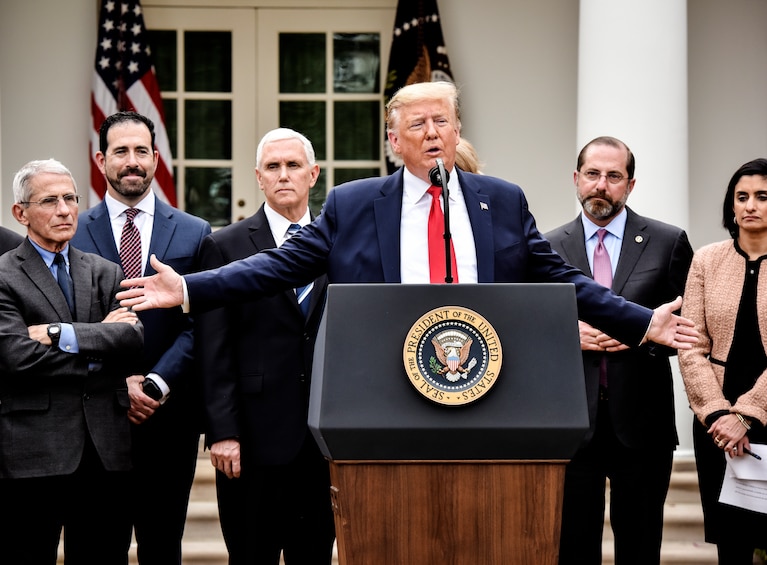
From the Rose Garden, Trump said, “To unleash the full power of the federal government, I am officially declaring a national emergency.” Referring to that as “two very big words,” he said it would allow him to quickly get $50 billion to states, territories and localities “in our shared fight against this disease.” With all the coronavirus task force members participating in helping mitigate the coronavirus, Trump states that no resource will be be spared.
“I’m also asking every hospital in this country to activate its emergency preparedness plan, so that they can meet the needs of Americans everywhere,” Trump said in his remarks.
“Emergency orders I’m issuing today will also confer broad new authority to the Secretary of Health and Human Services. The Secretary of HHS will be able to immediately wave revisions of applicable laws and regulations to give doctors, hospital — all hospitals — and health care providers maximum flexibility to respond to the virus and care for patients,” the president continued.
“This includes the following critical authorities: the ability to waive laws to enable tele-health, a fairly new, and incredible thing,” he said.”It gives remote doctor’s visits and hospital check ins. The power to waive certain federal license requirements so the doctors from other states can provide services in states with the greatest need.”
“They can do what they have to do. They know what they have to do. Now they don’t have any problem getting it done,” Trump said. “Today we’re announcing a new partnership with private sector to vastly increase and accelerate our capacity to test for the coronavirus. We want to make sure that those who need a test can get it as very safely quickly.”
He added, “We’ve been in discussions with pharmacies and retailers to make drive-through tests available in critical locations identified by public health professionals. The goal is for individuals to be able to drive up and be swabbed without having to leave your car.”
“Again, we don’t want everyone taking this test. It’s totally unnecessary,” the president said.
President Trump also invited the director of the National Institute of Allergy and Infectious Diseases to come speak. He stated that the approach that America is taking is very forward and will help the stop the disease from going on longer than it should although there are still going to tons of cases appearing at least for the next couple weeks. He also states that right now is the time that we focus on people with underlying health issues and seniors who are at the highest risk out of anybody. “It is time that we are there for them.” Trump says.
Development of Possible Coronavirus Vaccine
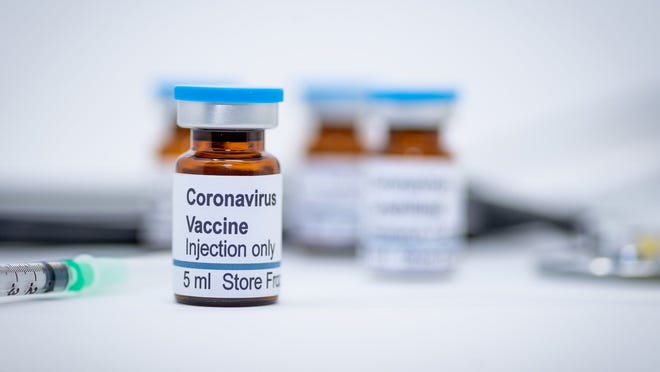
“SARS-CoV-2, the virus that leads to coronavirus disease 19 (COVID-19), has spread rapidly from the first known cases in China in December 2019 to countries around the world.” said Medical News Today. As of today there are roughly 380,000 cases worldwide, including about 16,500 deaths. In response to this global pandemic, researchers are working in labs to try to develop a coronavirus vaccine as quickly as possible.
Development:
Researchers are taking many different approaches on developing a coronavirus vaccine. These different approaches include a whole virus vaccine, a recombinant protein subunit vaccine, an antibody vaccine, and a nucleic acid vaccine.
Whole Virus Vaccine:
Whole virus vaccines would consist of weakened or dead forms of the virus that causes the disease. This could be very effective at providing immunity in the long run but there is the risk that some people will develop symptoms of the illness due to the vaccination. Many companies and universities such as Johnson and Johnson and the University of Hong Kong are currently working on this type of vaccine.
Recombinant Protein Subunit Vaccine:
Recombinant protein subunit vaccines differentiate from the whole virus vaccine because they eliminate the risk of causing infection in people who receive the vaccine because the vaccine doesn’t contain any live pathogens. Researchers are now trying to see if they can develop a recombinant protein subunit vaccine that specifically targets the spike protein which is what the novel coronavirus uses to attach to and infect cells. University of Queensland and a children’s hospital in Texas are currently using this approach to develop a vaccine for the coronavirus.
Antibody Vaccine:
This approach is used by researchers who are investigating whether they can create a vaccine using the antibodies from the SARS outbreak in 2002. SARS is very similar to COVID-19 as they come from the same family disease of coronavirus. So far, scientists have found that the antibody used to neutralize the SARS virus has also helped to limit how successfully the new coronavirus infects cells in humans.
Nucleic Acid Vaccine:
Nucleic acid vaccines inject genetic material such as DNA and RNA into live hosts. The cells that now contain the new nucleic acid make the proteins that were encoded in the DNA or RNA which they then present to the immune system. The process is very complex: however, this vaccine allows the immune system to fight off specific pathogens. This process looks very promising as it delivers immunity to humans: however, this approach has only been seen in veterinary medicine to this day. Scientists are now pushing these limits and are working with companies to develop a vaccine using this approach.
When will these vaccines be ready?
Estimations and projections as to when these vaccines will be ready vary tremendously depending now what type of approach and whether the person projecting is a scientist, politician, or a businessman. Most politicians and businessman are saying that the vaccine could be ready in just mere months.
However, based on knowledge and abundant research, scientists believe that developing a vaccine for coronavirus could take up to a year and might not be possible during the current outbreak.
This may seem like a long time to people, but the time taken accounts for the countless number of trials and approvals needed from the FDA. This long process ensures that the final vaccine that is developed is safe and efficient for people to use.
Digital Age Trauma
The digital age is the future of all younger generations nowadays. Teenagers are constantly on their cell phones and many are facing the harrassment and abusement of sexual partners through their smartphones.
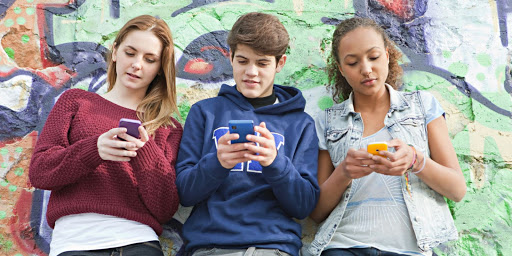
According to a recent national survey of teens who had been in a romantic relationship the past year, researchers found that 28% had been victims of “digital dating abuse”. Surprisingly, boys were targets more often than girls.
Even though teen dating abuse has been a problem for a long time, digital devices and media has opened up new ways for it to occur according to lead researcher Sameer Hinduja, co-director of the Cyberbullying Research Center and a professor of criminology at Florida Atlantic University.
Nowadays teens can threaten others through text, post embarrassing images online, share unwanted private sexual images to friends, take others phones to find their secrets, and so many more possibilities. Media has made it easier for teens to find the information they need to use against their partner. The new findings, from a nationally representative survey, give a better sense of how common the problem is among U.S. teens, Hinduja said.
“This helps clarify what’s going on with youth who are in romantic relationships,” he said. “Many teenagers,” Hinduja said, “really don’t know what they’re doing when it comes to building healthy relationships.
Online dating abuse is not an isolated issue: many teens in the study state that they have been abused offline including physically, verbally, and coercive behaviors. This often correlated with digital abuse. This fact is not shocking since unhealthy or toxic relationships usually manifest both face to face and online.
Elizabeth Englander, a researcher who was not involved in the study, agreed. “It makes no sense to think that someone who is being abusive toward a dating partner would do so only in person,” said Englander, executive director of the Massachusetts Aggression Reduction Center at Bridgewater State University. “This is an important [study],” she said. “It demonstrates the close relationship between different psychological types of dating abuse.” So when talking to kids about dating abuse, Englander said, it’s important to address both real-world and online behavior.
Another findings surprises most people: boys were significantly more likely to say that they have been abused that girls. Roughly 32 percent of boys reported it compared to 24 percent of girls. It remains unclear why. But, researchers noted that young girls, when dealing with relationship problems, may turn to aggressive behavior that is stereotypical of boys.
Overall, teens who were victims of dating abuse offline were more than 18 times more likely than their peers to report digital abuse, too. Many children are at increased risk including those who are sexually active, who has ever sent a “sext”, who has depression symptoms, or who have every been cyberbullied in the past. Researchers believe that it is very possible that when sex or “sexting” becomes part of the relationship, one person fill feel they have more power than their partner.
Many schools work hard to implement programs that help children to deal with cyberbullying and sexting. But kids also need to learn broader lessons.
“We should be talking to them about what healthy, respectful relationships look like — both platonic and romantic,” Hinduja said. “And it should start in middle school.”
That was also his advice to parents.
“I wouldn’t want parents to have a knee-jerk reaction and take their kids’ devices away,” Hinduja said. “We need to let our sons and daughters know they can talk to us, and have nonjudgmental conversations about these issues.”

